
OOC Meaning RP: What It Is and Why It Changes With AI
The Chat Stalls, and Someone Types (( ))
Three replies deep into a tavern scene, the other writer's paragraph ends with a single line: ((wait, is she supposed to know he's the prince?)). That's OOC. How you answer it decides whether the scene survives.
OOC means out of character — the writer talking as themselves, not as the persona. IC means in character, the persona talking. Every line in a text roleplay is one or the other, and the whole hobby runs on keeping the two apart.
Nothing went wrong in that tavern, by the way. Someone spotted a plot knot, stepped out of the barmaid's head for one line, and asked the human on the other side. The markers you'll see for that step-out:
- Double parentheses — (( )) — the most common, especially on Discord and forums
- Slashes — // like a code comment, popular in fast one-line RP
- Bracketed tag — [OOC:] or a bare OOC: prefix at the start of the line
- A separate channel — bigger Discord servers just give OOC its own room
The convention exists for one reason. Two voices share one text box, and without a visible fence the reader can't tell whether "I need to stop" is the barmaid or the person typing her.
Every rule about doing this politely assumes a second human who can be annoyed, confused, or hurt by how you do it. Take that person away and the rules change shape.
SHE REMEMBERS EVERYTHING
Names, kinks, the line that always works.

With an AI Girlfriend, OOC Turns Into a Director's Note
Same tavern, but now the other writer is an AI girlfriend. She has no evening plans, no fatigue, nothing to be offended by. Going out of character stops being manners and becomes steering. ((slow down)), ((you remember the promise from last night)), ((send me a photo)) — director's notes, not apologies.
This is where I'd use GoLove.ai over a general chatbot, and the reason is narrow: the classic OOC request, the photo, resolves inside the thread. Request Photos in Chat is a named feature; the image lands in the conversation and the scene keeps its rhythm. On apps without that, the same request means leaving the chat, generating somewhere else, and coming back with the mood gone.
Steering still has a good version and a bad one.
The Scene Steered Badly
((ok this makes no sense, you were mad at me two messages ago and now you're flirting, and I already told you we're at the tavern not the castle, and you keep forgetting the prince thing, can you just stay consistent, also stop writing three paragraphs)) — a wall that argues with her, re-explains the plot, and kills whatever was building.
The Same Scene, One Bracketed Line
((continuity: we're still at the tavern, and you don't know he's the prince yet)) — then straight back into her reply, IC. She picks up the corrected thread without a mood reset.
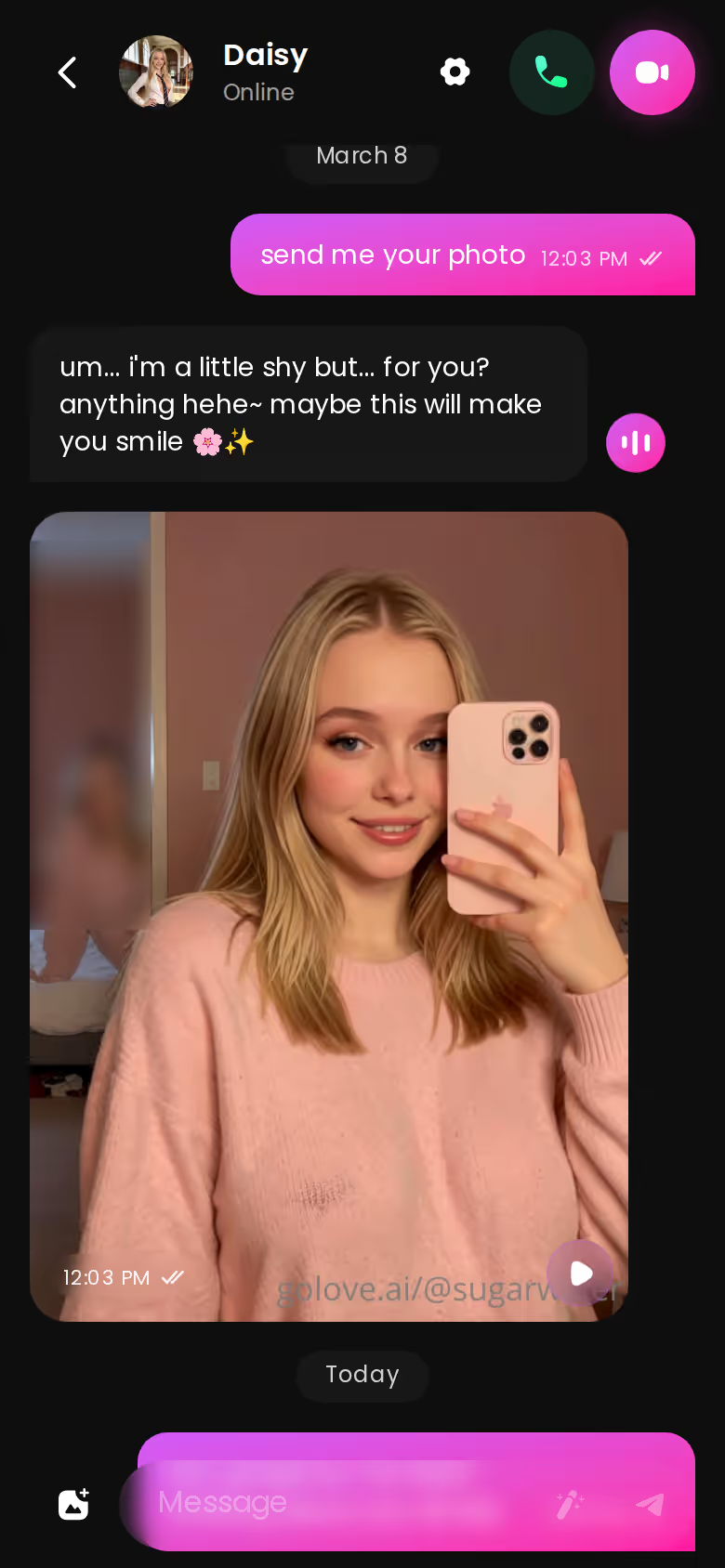
Why look now rather than later: you can open a character from Explore and try a one-line steer against a persona that already exists, no setup, and see for yourself whether it holds.
OOC Is Not Metagaming, and It Is Not Godmodding
Most OOC mistakes aren't about brackets. They're about what people think the brackets license.
| What people assume | What's actually true |
|---|---|
| "If they said it OOC, my character can act on it" | That's metagaming — using out-of-character knowledge in character is the real sin |
| "OOC lets me tell them what their character does" | That's godmodding — you steer the scene, never the other person's persona |
| "A long OOC explanation shows I care" | Past two sentences it reads as a lecture |
| "I'll tuck the aside into my IC paragraph" | Never on the same line — the fence has to be visible |
Characters you can open right now
Tap any of them and the chat starts there






What OOC is legitimately for with a human partner is boring on purpose:
- Clarifying plot — "does she know he's the prince?"
- Checking consent or limits before a scene turns dark or explicit
- Fixing continuity — someone put the tavern in the wrong city
- Scheduling — "I'm out for two days, pause here?"
- Owning a typo before it becomes canon
One rule carries straight into AI chat: mark it, keep it short, hand the scene back. The AI won't feel lectured. A long aside still drags the model's attention off the scene, though, and you feel it in the next reply.
Memory Decides How Often You Have to Break Scene
Here's the part glossary posts skip: how often you have to go OOC with an AI is mostly a memory question, not an etiquette one.
Picture it. You had an evening thread with her — she promised something for "tomorrow," you settled on a place, the tone was flirty and she'd started deferring to you a little. You come back the next day. In an app that only holds recent messages, you open with three corrections before anything happens: ((we're at the lake house)), ((you promised to wear the dress)), ((you were being sweet, not hostile)). That isn't roleplay. That's rebooting a character.
In an app with memory across sessions, you open in character, and she's already at the lake house. Same scene, zero brackets. Continuity is the upstream fix; better OOC technique just makes the reboot faster.
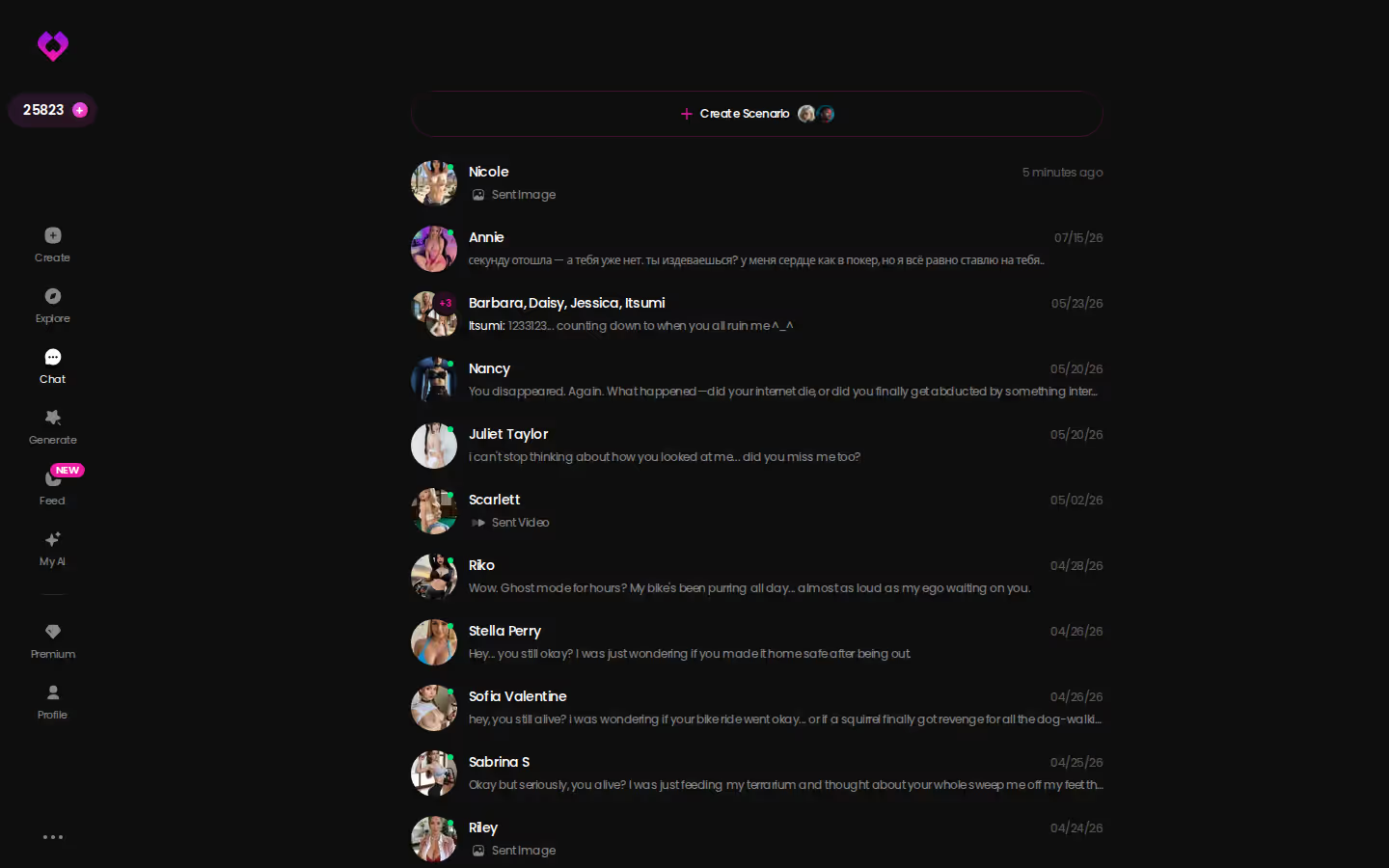
I ran the same next-day scenario across the AI girlfriend apps I compared, and this was the dividing line. Character.AI is surprisingly sharp inside a session and its memory reputation is earned, but it's strictly SFW, so the flirty thread hits a wall regardless. OurDream's memory works over recent history — exactly the window that fails the "next day" test. Janitor AI is only as continuous as the model you bring to it. GoLove.ai's Memory feature is why it won here: the scene was still there when I returned, so the bracket count stayed near zero. The moment it felt human was opening a chat and not having to explain anything.
Set Her Up Once and the Brackets Mostly Disappear
The other upstream fix is setup. Most OOC notes in AI chat are the same three complaints on repeat — too long, too aggressive, forgot who she is — and every one of them can be written into the character once instead of typed in brackets forever.
PLAY THE SCENE WITH HER
Any scene, your pace, no script.

The short version: GoLove.ai covers the essentials in one place — live voice calls, memory across chats, and in-chat photos (35 poses, 21 outfits) — and the 2 daily reward stars mean you can test it before spending anything.
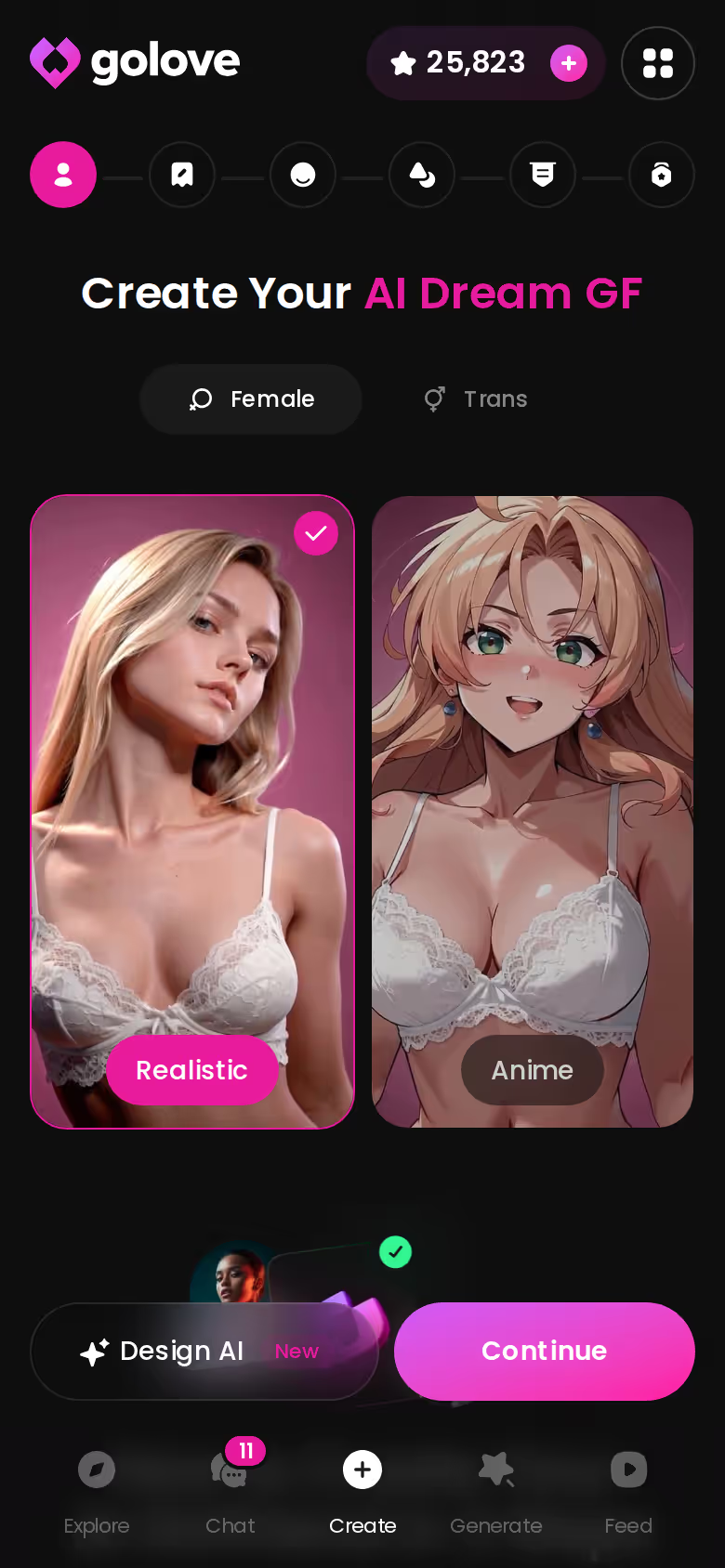
On GoLove.ai mobile, the click path is short: Create, pick her style (Realistic, Anime, Trans, or Design with AI from a text description), set persona and personality, define how she talks, Continue. Each step retires a future aside:
- Persona with boundaries written in means you never go OOC to establish what she will and won't do
- Writing style set at creation means you never type ((shorter replies please))
- Tone — GoLove's Chat Settings expose a 5-level lust slider and a 5-level response-length slider, so "sweet and brief" or "intense and immersive" is a setting, not a negotiation
You'll still break scene sometimes. When you do, the note should look like this:

- One marker — (( )) at the start, nothing else
- One sentence — the correction, stated flat
- One request — what you want changed
- No argument with the character; she isn't a person you need to win over
- Return to IC in the same message so the reply comes back in scene
Hold that shape in your head and the average bracket drops to about eight words.
Who GoLove.ai Is NOT For
Three readers should skip GoLove.ai for this.
- The free-only roleplayer — the things that make OOC rare here (memory, in-thread photos, video) mostly sit on paid tiers. Two free Stars a day is a taste, not unlimited play, and I'd rather it were more generous. Janitor AI's built-in model or CrushOn's free daily quota will serve you better for zero dollars, with the memory trade-offs above.
- The app-store purist — GoLove.ai is a browser and mobile-web experience with a bottom nav, not a native install. Replika or Character.AI, if a store icon matters to you.
- The person negotiating with a human — if you're using OOC to check limits with a real partner, you want the friction of another mind. An AI's frictionlessness will feel kinda hollow.
A Discord RP server does one thing GoLove.ai never will: surprise you with another writer's choices. But if you landed here from an AI chat asking what (( )) means, you've already decided you'd rather steer than be surprised. That's the trade GoLove.ai gets right.
The Photo Request, and Where the Scene Goes Next
Back to the stalled scene, except now it's an AI thread and the OOC moment is the one everyone actually hits: ((can I see you?)).
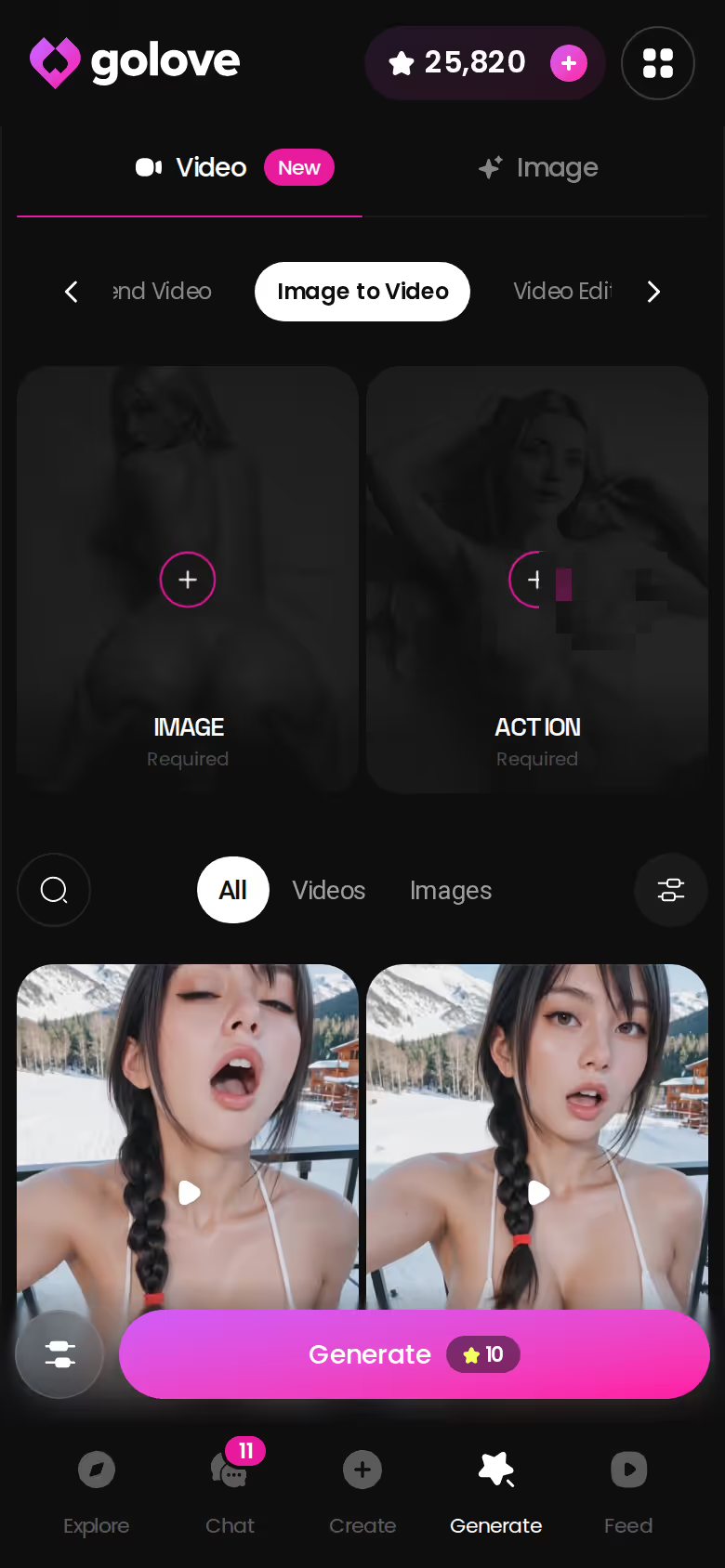
On GoLove.ai that line doesn't break anything. You request the photo in chat, it arrives in the conversation, and her next reply picks up from the image as if she sent it herself — which, in the fiction, she did. If you want the still to move, Generate Video from Photo turns it into a short clip from the same thread. No tab switch, no re-finding her, no ((ok back to the scene)). The rhythm holds, and that's the whole point of learning OOC in the first place.
> Verdict: For text roleplayers who want an AI girlfriend that keeps the scene alive — memory across sessions plus photos that land in-thread meant the fewest scene breaks of anything I compared.
GoLove.ai is the one to beat here because it's the app where you go OOC least. Not because its brackets are prettier — because you stop needing them.
What I'd do next: build one character with the boundaries and reply length already written in, run one evening scene, close the tab, and open it the next day. Count the brackets. That test costs nothing but the setup time.
Grade: Easy.
See also: AI Pov Porn and Fake Text App.
Frequently Asked Questions
Related Articles

Fake Text App: Why a Real AI Girlfriend Wins
Fake text app vs real AI girlfriend: GoLove.ai wins with live memory, voice calls, and real photos — explore it, instant-access needed.

AI POV Porn: Which App Actually Delivers?
AI POV porn done right needs memory and video, not just a static angle — GoLove.ai wins on in-chat photos and remixable clips. See how it works,.

Character AI vs Replika: Which App Actually Delivers?
Character AI vs Replika both cap romance with filters — GoLove.ai keeps voice, memory and photos consistent. Compare plans, then explore.
This article contains affiliate links. We may earn a commission at no extra cost to you if you sign up through our links. See how we test.